
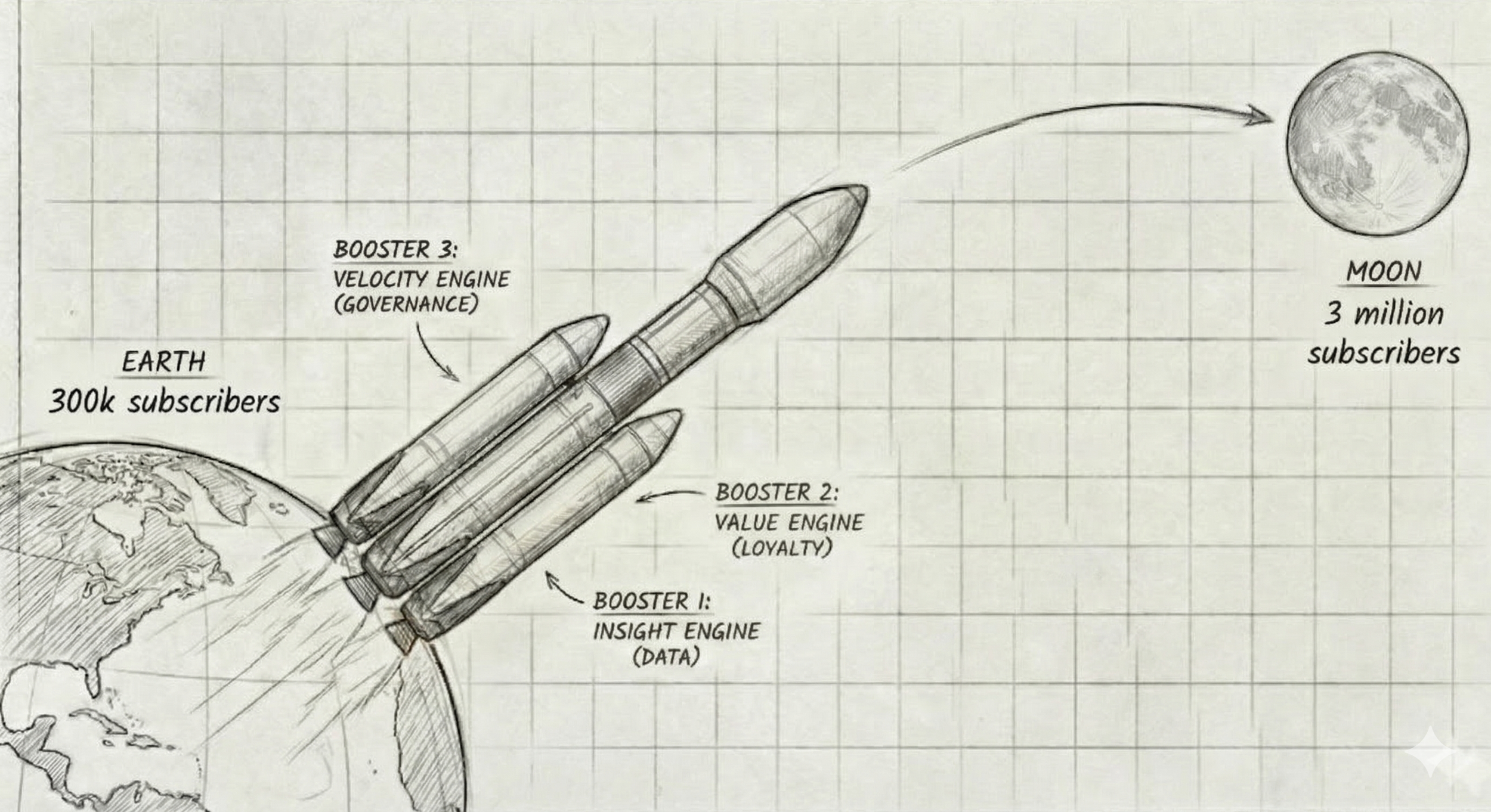
We built a rocket that got us to the clouds, and now let’s get it to the moon.
Wolt+ was a successful experiment—it was time to turn it into a global growth engine.
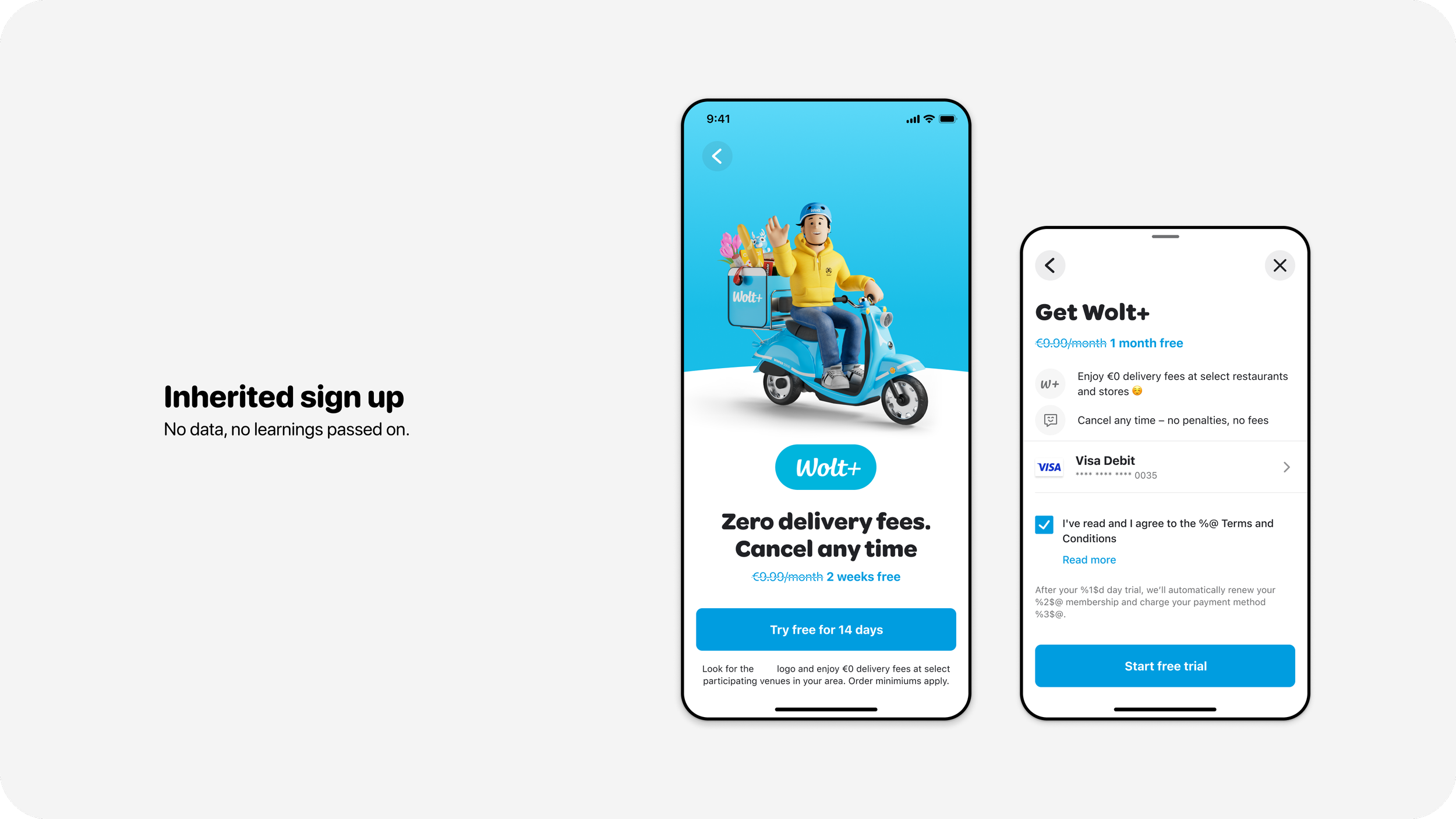
When I joined, the subscription program had just transitioned from a "hacked together" proof-of-concept to a permanent product pillar. The original experience was built for speed, not scale; it proved the rocket could fly, reaching 300K subscribers (the clouds).
My mandate was to architect the infrastructure for the "Moon Mission": evolving a bare-bones feature into a data-driven, multi-market loyalty ecosystem. By shifting from gut-driven decisions to an insight-first strategy, we didn't just reach the 1 million milestone—we propelled the system to 2.8 million subscribers and $500M+ in annualized GOV.
My role
I led the design strategy for the Wolt+ ecosystem, directing a core team of 1–2 designers while driving cross-functional alignment across 30+ global markets. My role was to bridge the gap between design execution and commercial strategy, frequently stepping into product leadership roles to define the roadmap. I was responsible for ensuring that our design operational frameworks supported the goal of scaling from 300K to 2.8M subscribers.
The landscape: Flying blind
When I joined the Moon Mission, the subscription engine was a "black box." We had a massive target (1M subscribers), but zero tracking infrastructure to tell us why users were converting or dropping off. To move the needle immediately, I couldn't wait for perfect data; I had to build a foundational bridge using available growth signals.
Establishing Comparative Benchmarks: I proactively audited DoorDash’s UXR repositories and Wolt’s legacy research. By identifying global subscription patterns, I established comparative benchmarks to inform our initial hypotheses while our local tracking was being matured.
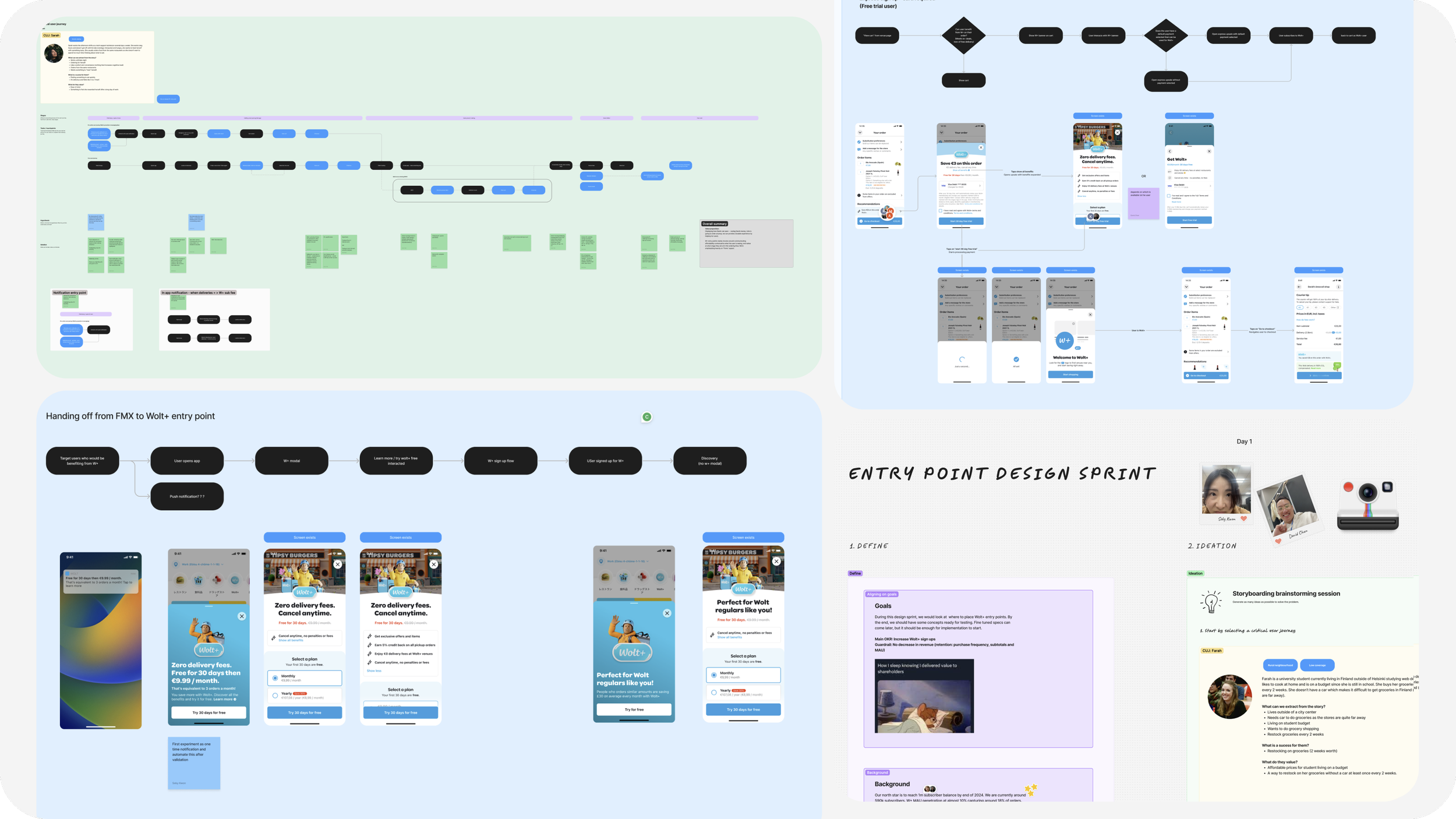
Applying Informed Heuristics: I led workshops to align the team on Critical User Journeys (CUJ). We used expert design heuristics to ensure our first iterations solved high-value goals (e.g., "The Casual" user) rather than being shots in the dark.
The Maturity Shift: This resourceful start allowed us to ship a baseline Wolt+ experience that finally generated the first-party data we needed. This data became the fuel that allowed me to institutionalize the Thoughtful Execution model for all future global roadmapping.
The propulsion system: Three strategic booster engines
To take us from the clouds to the moon, I’ve recognized that we need to focus on 3 areas – 3 boosters.
Booster 1: The insight engine (Turning gut-feeling into data-first roadmap)
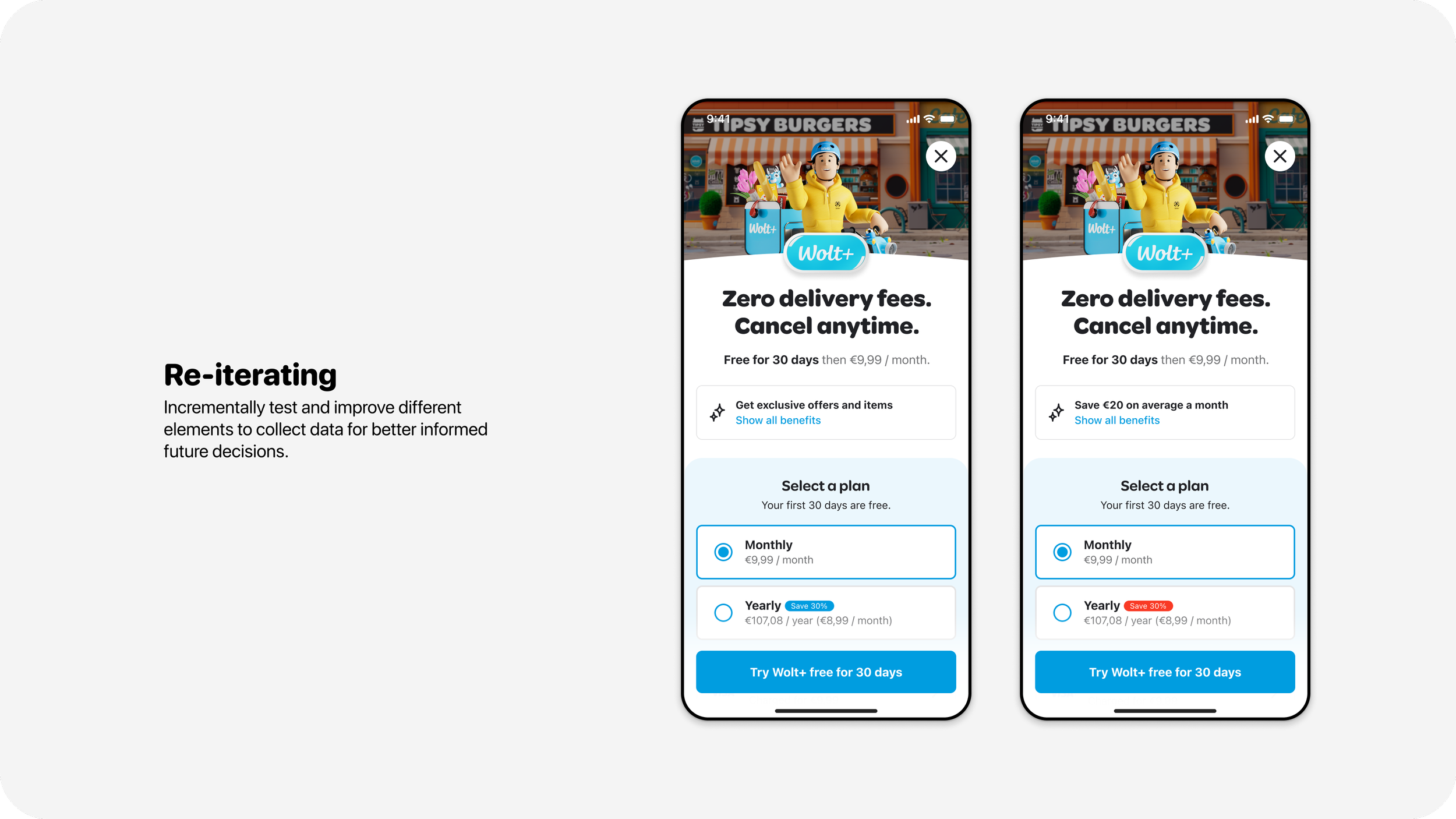
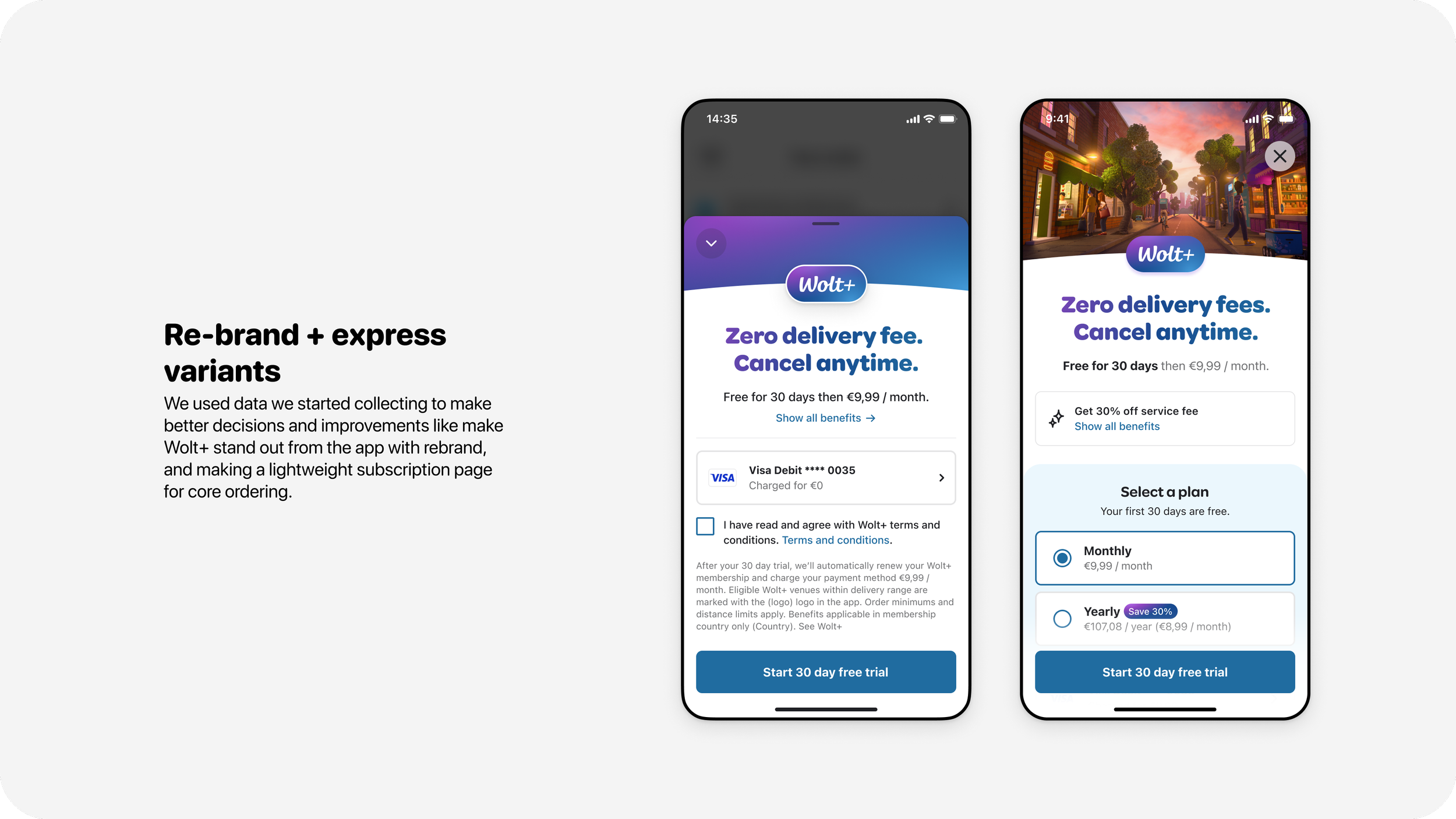
Transitioning the organization from "gut-driven" development to a systematic, experimental framework. I led the incremental evolution of the sign-up flow, using a series of micro-experiments to transform a "data-poor" experience into a primary engine for user intent data, de-risking our long-term growth roadmap.
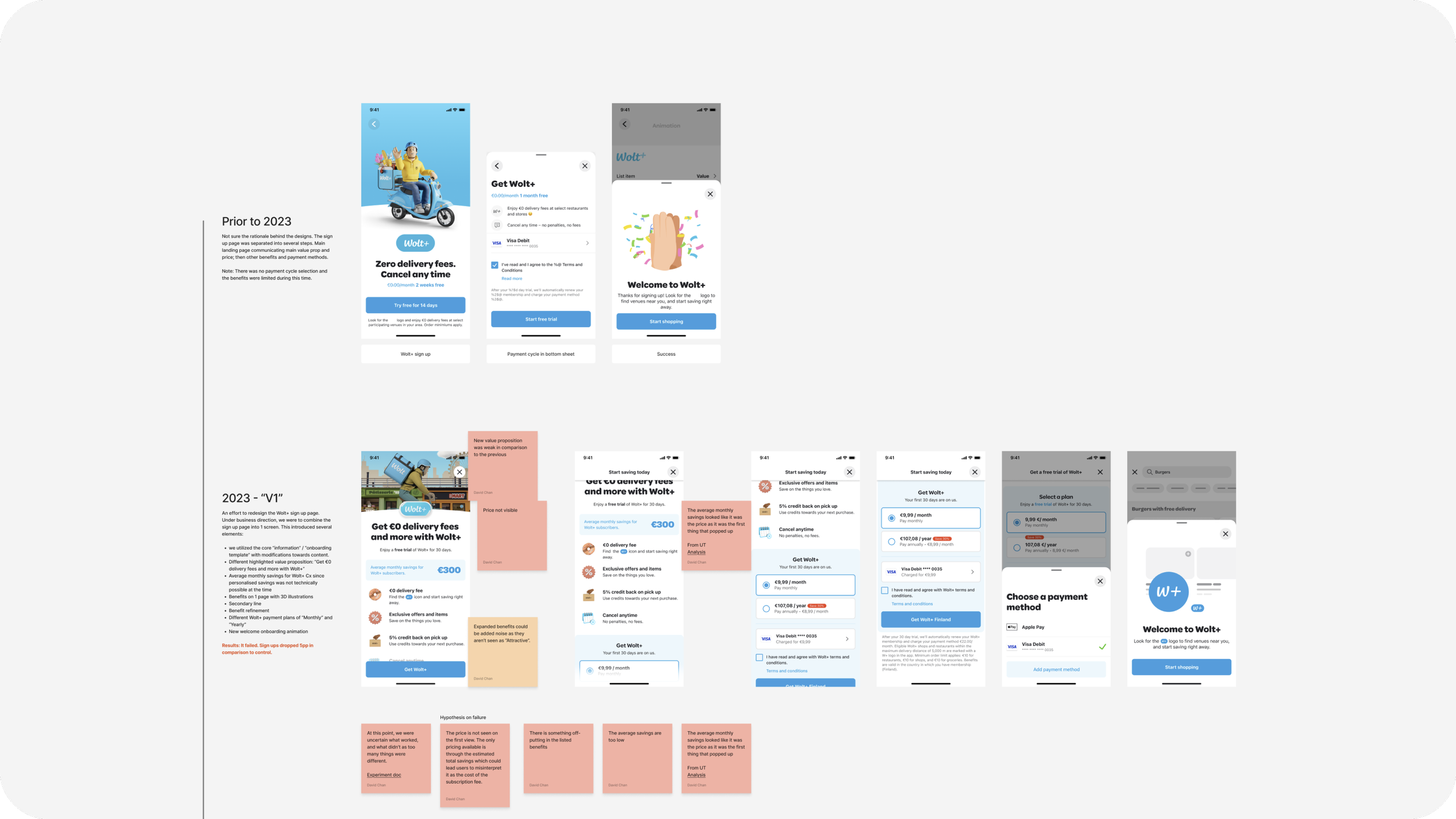
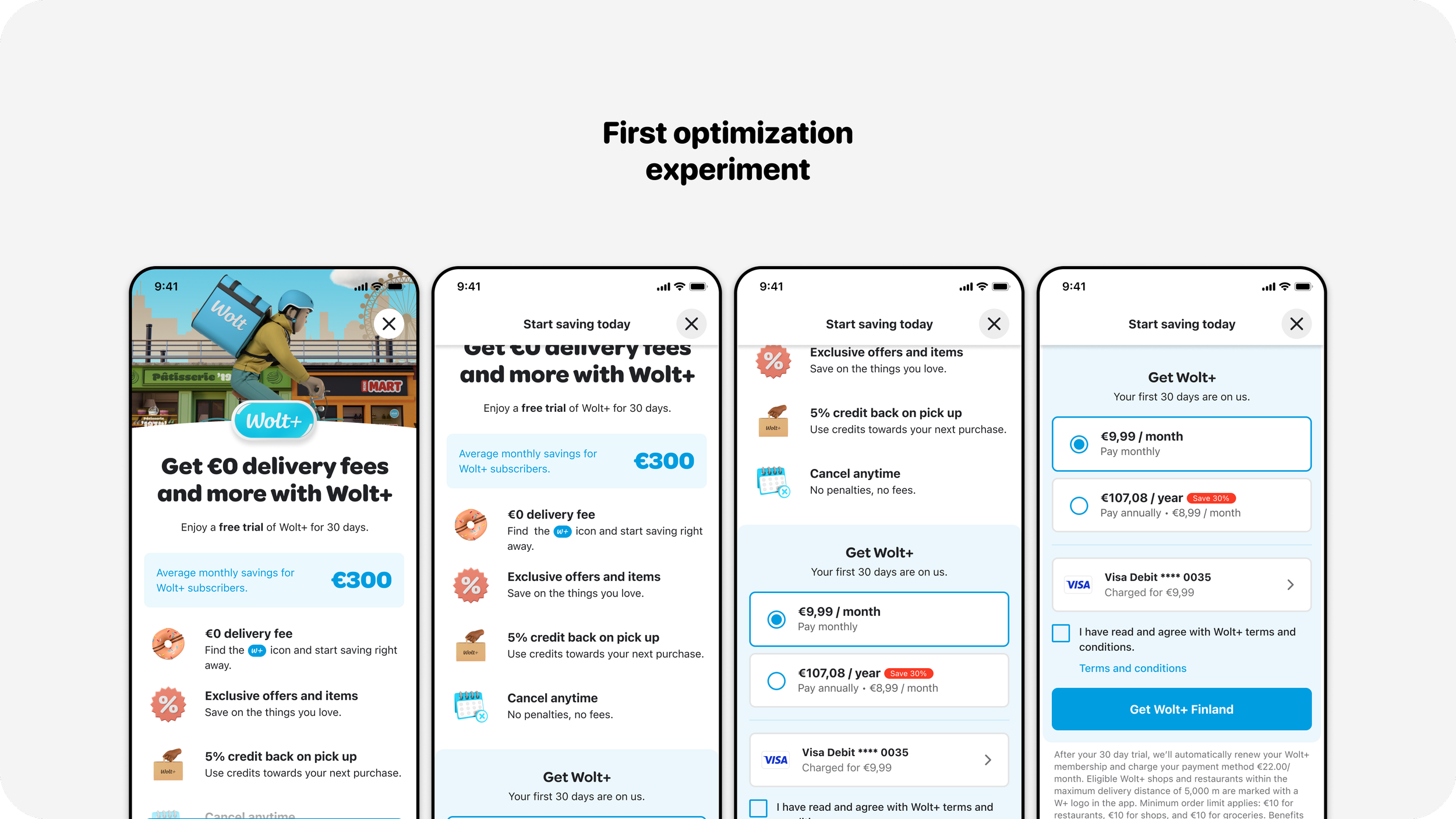
Booster 2: The value engine (Architecting the loyalty ecosystem / logic)
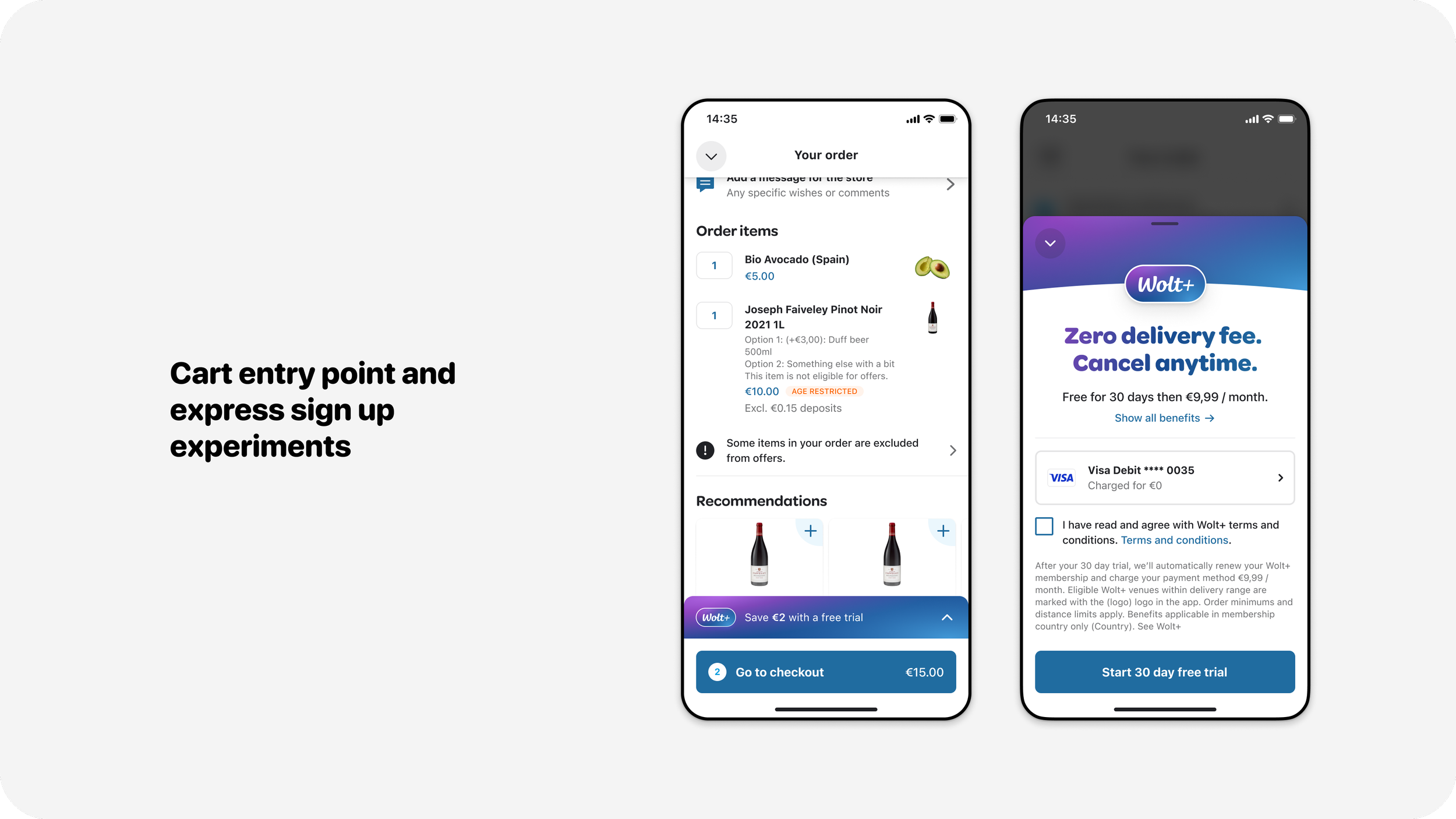
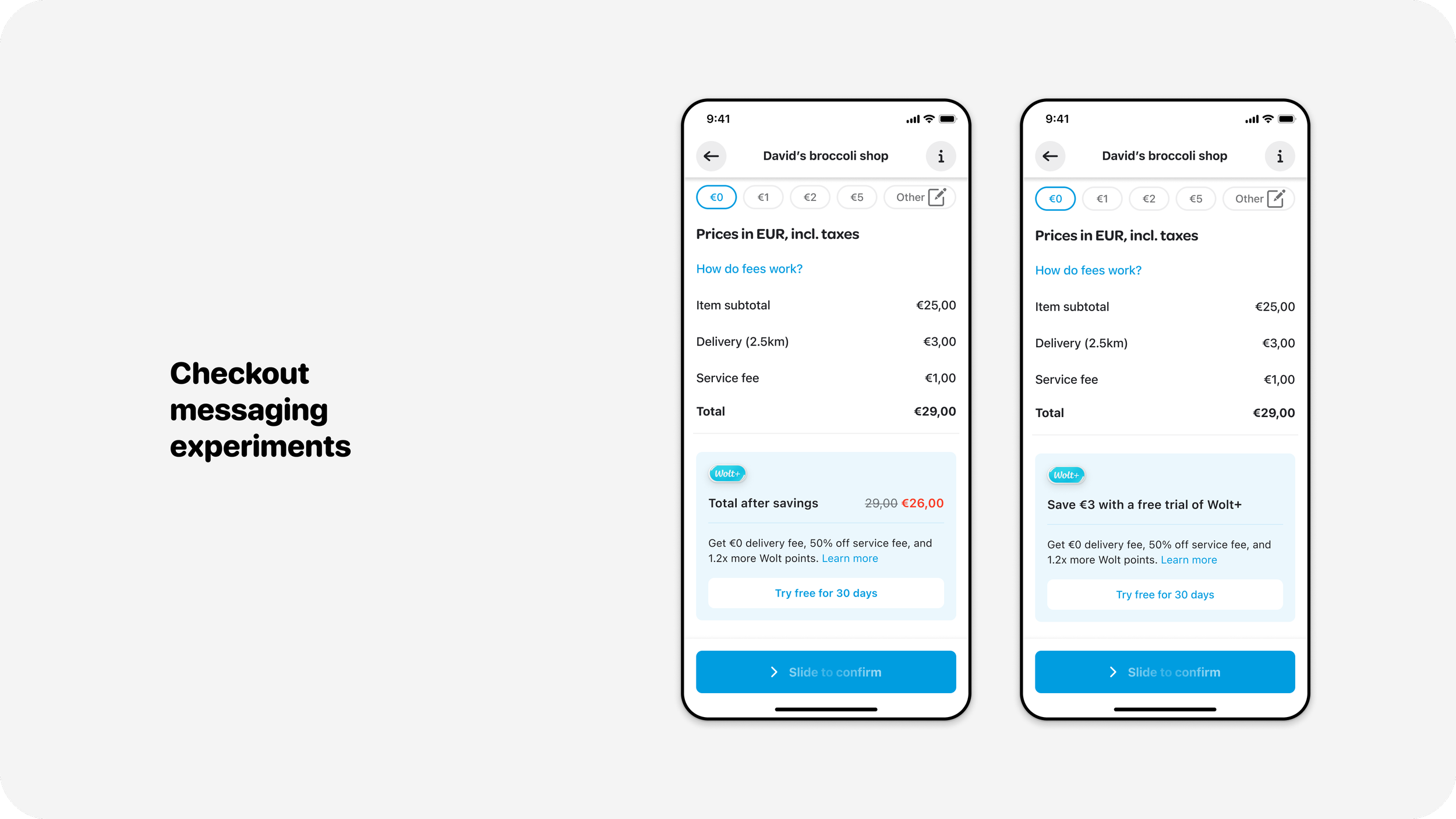
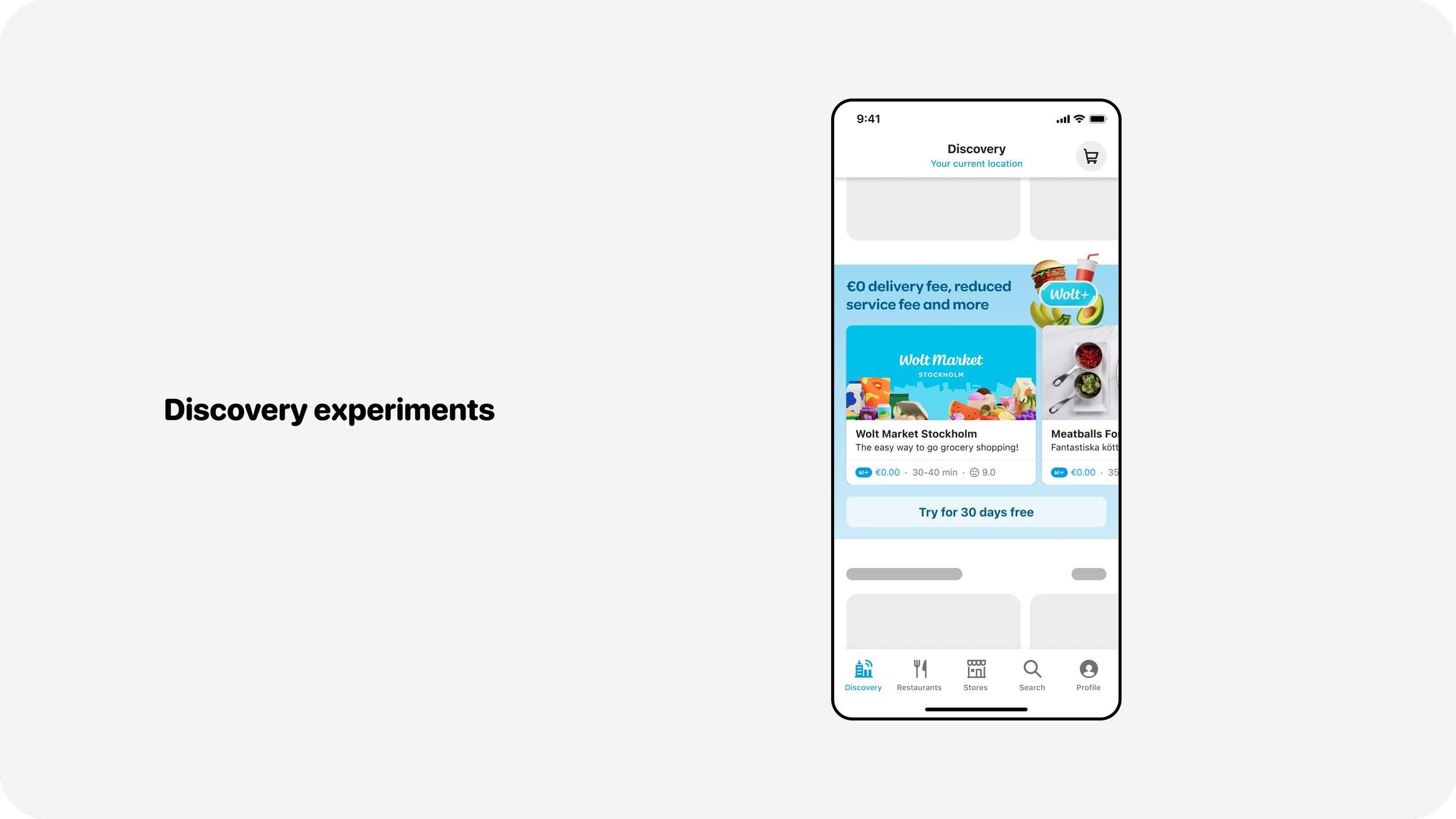
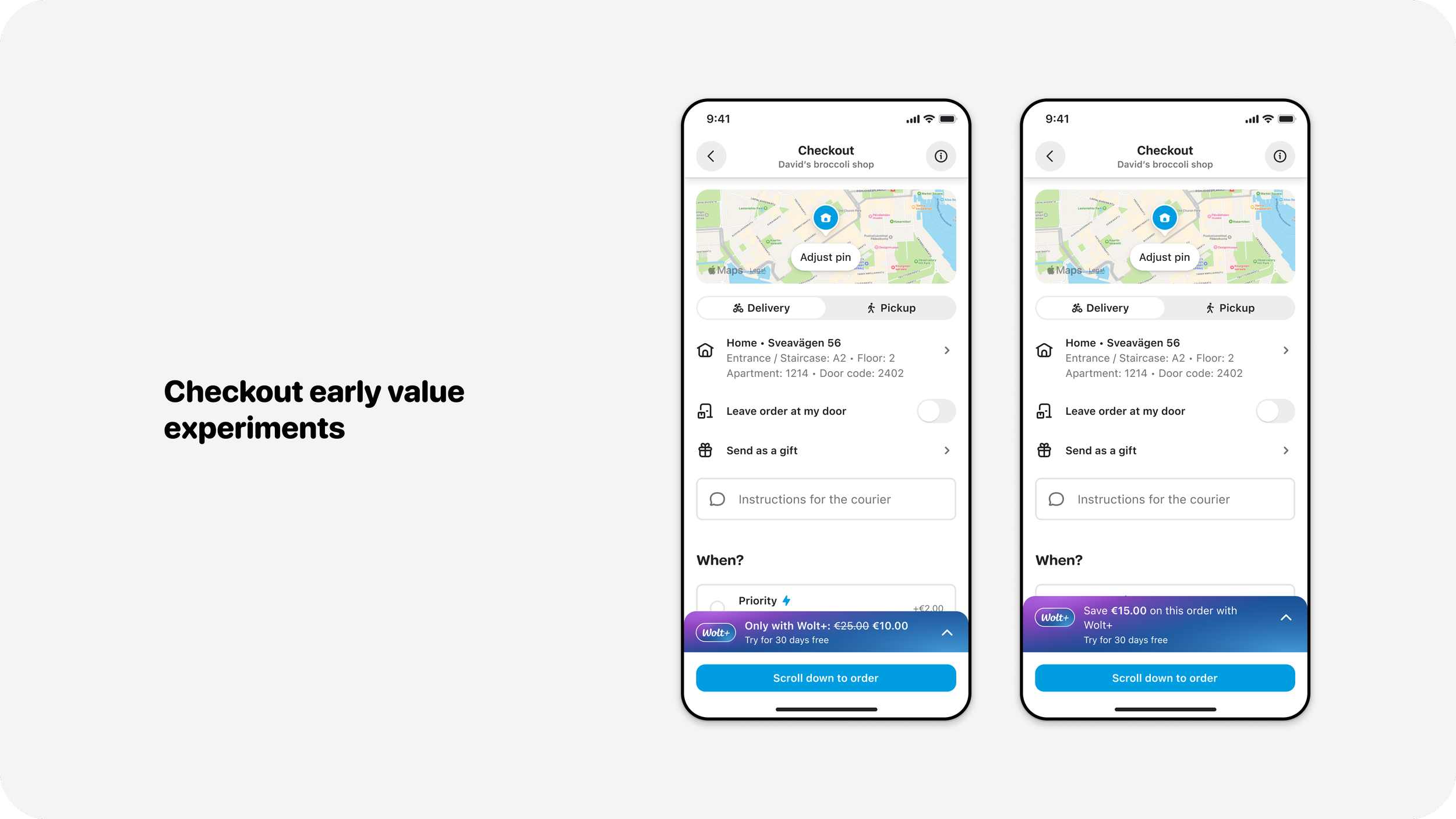
Shifting from "one-size-fits-all" messaging to value relevancy logic that adapts to the consumer’s needs contextually. I architected dynamic entry points across the user journey—from search results to checkout—that calculated and surfaced real-time savings. This shifted the product perception from a "monthly cost" to a "personalized saving tool," directly increasing subscription.
Booster 3: The velocity engine (operational governance and cross-functional alignment)
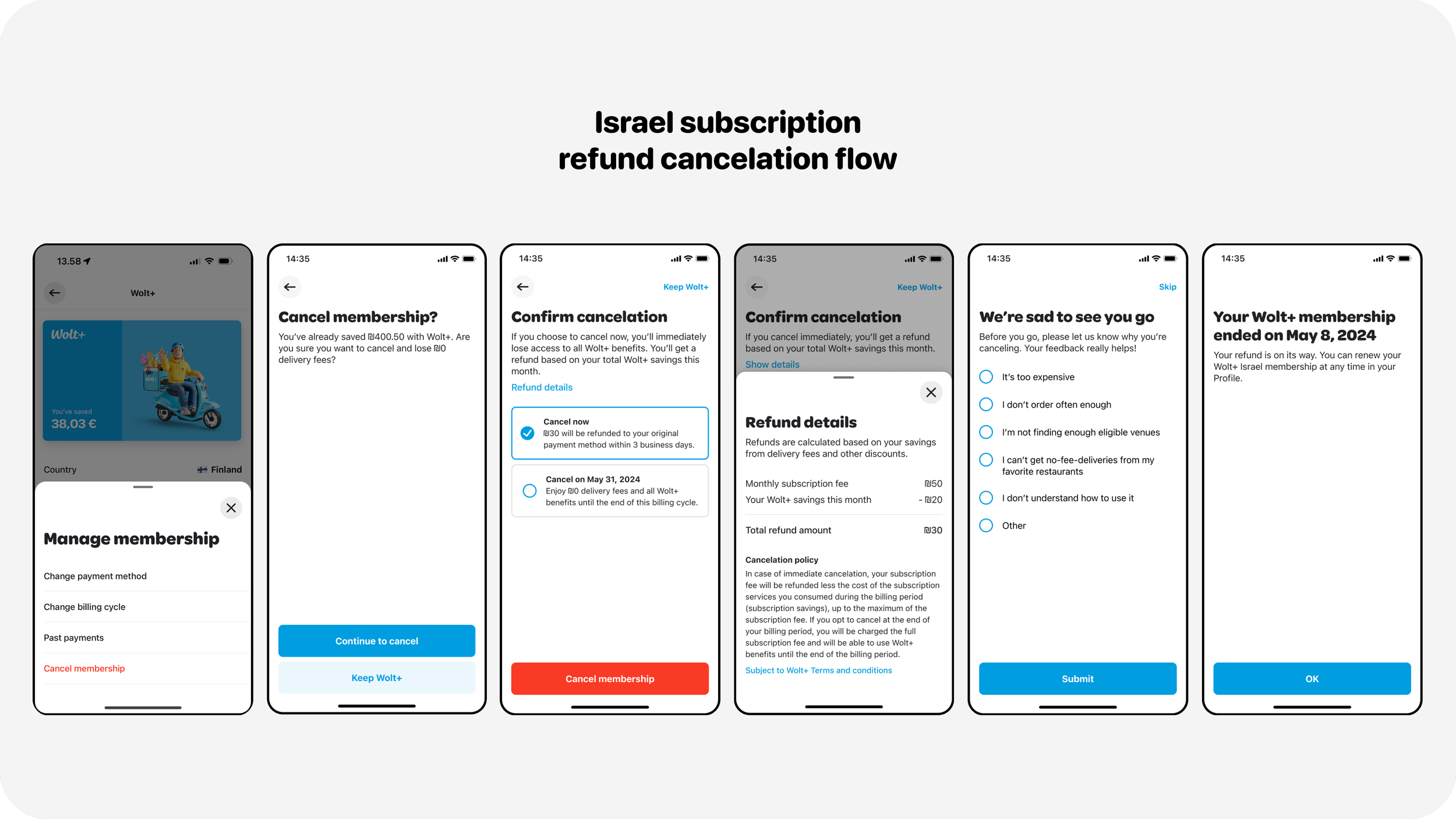
To scale Wolt+ globally, I institutionalized the Thoughtful Execution framework. This moved the team away from a "feature factory" mindset and toward a disciplined, hypothesis-driven approach. By forcing a rigorous definition of the Problem and Hypothesis before any pixels were moved, I increased our "success hit rate" and ensured engineering resources were only spent on validated ideas. This operational DNA allowed us to launch high-complexity markets, like Israel, with total alignment between Design, Legal, and Product.
Post flight analysis
Success at scale is rarely a straight line. While we achieved our nearly 10x growth targets, the most valuable part of the 'Moon Mission' wasn't just the final destination, but the systemic resilience we built along the way.